Octavian-Dragomir Jora
Professor, Ph.D., Habil., at the Bucharest University of Economic Studies, where he has cultivated and developed interests in comparative economic systems, critical/creative thinking, and geo-politics/geo-economics of cultures and civilisations. Dr. Jora is involved in epistemic communities – i.e., board member of the Romanian Economic Society, the Research Center in International Business and Economics, etc. Recently, he received the Woodrow Wilson Scholarship from the Romanian Cultural Institute for research conducted in Washington, D.C., United States of America. He is (co-)author of numerous scientific works (100+ titles), as well as of journalistic op-eds, essays, pamphlets (1000+ titles), his works being distinguished over time with plentiful and prestigious scholarly and mass-media awards. Also, dr. Jora is editor-in-chief of the Œconomica journal and founder editor of The Market for Ideas pop-science magazine (Curriculum Vitae)
Owning Now, Owing Then. Culturally Sustainable Development Is about Material Property as Much as It Is about Spiritual Legacy

Owning Now, Owing Then. Culturally Sustainable Development Is about Material Property as Much as It Is about Spiritual Legacy

Social Science and Humanities Research Association (SSHRA) is an international community of researchers, practitioners, students and educationists that is devoted to the development and the spread of ideas in the field of social sciences and humanities. SSHRA is promoted by Eurasia Research. SSHRA aims to bring together worldwide researchers and professionals, encourage intellectual development and create opportunities for networking and collaboration. These objectives are achieved through academic networking, meetings, conferences, workshops, projects, research publications, academic awards and scholarships. More


Romanian Capitalist Economic Thought (II)

Romanian Capitalist Economic Thought (II)

“The disappearance of Communism in Eastern Europe in 1989 reflected the collapse of the existing belief system and accordingly the weakening of its support organizations” (North 1997, 18). Such a verdict catches the image of a bivalent process of deconstruction and institutional reconstruction: from former imposition of material and moral servitudes to economic and political liberalization. But that new order – of the market and of the multiparty system – could have been accomplished, ultimately and inevitably, with the same people who inhabited the old institutional and organizational architectures, both at the top and at the base of society. The intellectual scaffolding of transformation became a critical resource, and its training and performance were, among others, functions of epistemic tradition and transfer. More


PrestiDigital GeoPolitics

PrestiDigital GeoPolitics

We, humans, live and act in the old physical space, though spatiality will never be the same after digits became the atoms of some “virtual matter”, in which our bodies and souls e-immersed. Cyberspace, equated reasonably with the Internet, allows for larger and better markets and fortunes, as well as more and fierce dangers to our security and liberty, to our homes and homelands. More


The CORONAtion of Equality, the Abdication of Inequality

The CORONAtion of Equality, the Abdication of Inequality

We all are equal in front of death, but we are living lives in unequal ways, because of our deeply uneven endowments and unsimilar chances that Gods or odds reserve for us. We are (supposedly) alike in front of laws, while some (one-sidedly) legislate fake sameness. Among the many questions we may ask while getting bored in the tight safety of our lazaretto homes: is Corona an equalizer?  More


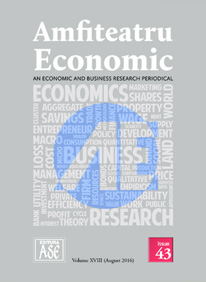
Amfiteatru Economic, the Measure of Lastingness

Amfiteatru Economic, the Measure of Lastingness

I started writing about economics and economy in the “big press”, both academic and mass-media, around the same time, somewhere in 2002. This, after having explored journalism during the university studies. I had understood the difference in the literary species between an article dedicated to the mass-media field and one published in academic journals, long before the biblio- and sciento-metric tsunami reached Romania, with its (inter)national indexations and citations of the scientific publications.  More


For a Privatization of Environmental Public Policies

For a Privatization of Environmental Public Policies

Climate change and sustainable development are, somehow, like “love and marriage”, and they go together like “a horse and carriage”; and if you ask “the local [as well as global] gentry”, they will say that this is “elementary”. But despite a basic consensus, that something is happening to our earthly environment and something must rapidly be done, the problem is much more delicate scientifically and politically. More


Foot(Glo)ballisation by World Cup

Foot(Glo)ballisation by World Cup

If people were to tell their story to the inhabitants of other worlds in this universe, it would suffice to produce a chronicle of earthly discussions containing the keyword or hashtag #WorldCup. I believe we can safely leave out “football” from this label – the elliptical expression “World Cup” instantly directs our thoughts to the sport that will have grown into a religion defined by the “new testament” of Diego Maradona (1986) and his “second coming” in the form of Lionel Messi (2022). The secular religion of football is economic as well as political in nature; in other words, it is an instance of “scientifically” exploited “culture”. The Qatar edition is one of the clearest examples thus far of how the downright scientific marketing of a symbolic good (i.e., football) can contribute either insidiously or ostentatiously to the planetary management of cultural values (a potpourri of frigid conservatism and frivolous progressivism): a campaign worth some $300 billion meant to wash the image of some and the brains of others on the shores and hydrocarbon reserves of the Gulf. More


My Brentry after Their Brexit

My Brentry after Their Brexit

Could Britain be immutable as well as irreplaceable? This is a question worth pondering, given several of Britain’s attributes: its greatness as an island with tendrils reaching across the entire planet, even if it is limited today to a mere geo-cultural-symbolic rite as its geo-politico-economic clout has somewhat waned; its unity, if only among its own constituents, insofar as in Europe it hasn’t been particularly long-lived due to an overly Brussels-based rigid and (op)pressing bureaucracy; its kingship, even if henceforth God must Save the King after having watchfully protected Queen Elisabeth II throughout her 96 years of life, 70 of which spent as a reigning monarch. To a Euro-citizen recently returned to the United Kingdom after the Brexit, having to hand over the passport instead of the more familiar ID card at the border control represents the most immediately apparent change of tone. Looking strictly at the ambience, just as entering the (predecessor of the) European Union didn’t perturb the daily affairs of the Brits, neither did Britain’s divorce from the EU generate any depression. Yet, one cannot always perceive the subtleties beneath people’s (changes of) mind and (pre)judgments, even if these people are His Majesty’s subjects, yet also subject to error. More


The Sustainable University: Concept and Conception

The Sustainable University: Concept and Conception

“Sustainable University” is a kind of phrase to emanate a semantic scent with connotations – traced back to an ages-old polarity, yet always at great fashion in social affairs – seemingly both conservative and progressive. Really? Can we so frivolously mix polarities, opposites, antinomies? Well, let’s see. We are talking about conservatism because university and sustainability are involved in activating if not an “instinct”, at least a “rationale” for preserving/perpetuating the knowledge within people and the resources needed to make it work. As we are also talking about progressivism because both try to do it not in ankylosis, but in advancing such knowledge (i.e., in economics, on the allocation of scarce resources) across generations, and the society learns to evolve through each and every member, who is educated to evaluate. Conservation and progress can work together.  More


CAPITOL LETTERS (Ep. ∞): The Industrial Revolutionizing of the Social Contract: 4.0 Generation Updates

CAPITOL LETTERS (Ep. ∞): The Industrial Revolutionizing of the Social Contract: 4.0 Generation Updates

The “egg-and-chicken” problem when, for instance, reasoning on and ruminating about the history-long and worldwide plethora of technological shifts/rifts/drifts and social/political/economic realities is secondary to a principal obviousness: these two dimensions of the human(e) existence are involved in a co-evolutionary relationship, implying mutual and bi-directional causes and effects. Hence, defining (or decreeing) the “technological” as the independent variable and the “socio-” as the dependent one, or maybe vice versa, solely provides the scholar with insights onto limited segments from what it is, yet, a continuum; but, for the scientist, understanding each and every modest and simple link gets him/her closer to the underpinnings of the mega-complex chains of events. Studying Industrial Revolutions’ (IR) imprint on the functioning of polities is such a link, a compound of the chain of capturing the practical means which get us closer to our principled ends. More


CAPITOL LETTERS (Ep. 12): The Truth per Thaler Spent (or the Return on Insightfulness)

CAPITOL LETTERS (Ep. 12): The Truth per Thaler Spent (or the Return on Insightfulness)

That Economics is a science is a statement against which it is difficult to argue. Be that as it may, enquiring “what kind of science it is” (exact or social science) should be taken as a pertinent question in its own right. Economists, both those that have already made a name for themselves and those that are still learning the ropes needed to master the theoretical or applied approaches, are the ones expected to have addressed, in foro interno, such dilemmas. Notably, the profession is far from reaching a consensus among its members in such regard. However, investigating what sets economics apart that it finds itself in the position to judge the other sciences, actually, Science, is a track of inquiry that is rarely taken, let alone trod, yet one that could prove surprising if we consider all that it may reveal. The type of judgement we are alluding to refers to one’s capacity of logical reasoning, not that of bringing to a court of justice, i.e., of identifying culprits and casualties. Economic analysis is a way of judging/reasoning about things. More


CAPITOL LETTERS (Ep. 11): Across (Twelve) Land(s) and (Three) Sea(s)

CAPITOL LETTERS (Ep. 11): Across (Twelve) Land(s) and (Three) Sea(s)

Phoboskerdos and doxa: fear, egotism and glory. These are the inner forces of human nature, according to Thucydides, the “grandfather” of political realism, if we are to concede paternity in modern times to H. Morgenthau. These forces animate (or do they animalize?) this world since the world began. Realists, as weighers and counters of power both between individuals and nations, look towards and “chart” this world through “balances of power”. They poke fun at idealists, who naively seek concord among men and states through institutionalized bargains and norms (pace Kant and W. Wilson), by claiming that institutions, otherwise upheld as triumphs of reason, are nothing more than secondary products of a primary balance of power. Physical nature is the stage for human nature’s growls and pantomimes: it does not determine, nor dictate, but amplifies or blots human impulses and inferences. Geographies may not hold complete explanations, but they do present complications, as Eastern Europe has learned to its sorrow. More


FIRST EDITION

SUBSCRIPTION

FOUNDATIONS
The Market For Ideas Association

The Romanian-American Foundation for the Promotion of Education and Culture (RAFPEC)
THE NETWORK
WISEWIDEWEB
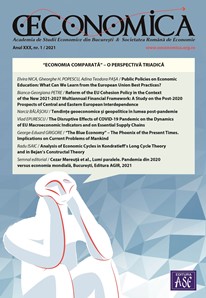
OEconomica

Amfiteatru Economic